
By Elspeth Hay
I am obsessed with the fact that acorns are edible. And I realize that to most people, this obsession sounds pretty surprising. So, let’s start with the obvious question: why acorns? The truth is that learning that humans can eat acorns has profoundly changed my life — and I think it can change yours, too. I’ve spent the past 15 years reporting on food and the environment, and much of what I’ve learned about our current industrial food system and what it’s doing to the living world around us makes me depressed or even panicky. But acorns? Getting to know the fruits of oaks and our other keystone nut trees hasn’t just inspired me — it’s completely changed my understanding of what it means to be human.
I didn’t start out life eating acorns. I grew up in Brunswick, Maine, with two birdwatcher parents and spent most weekends in the backseat of their car, being driven around the state, looking at birds, and learning about their habitats. I learned, for example, that sapsuckers drill neat little rows of holes into birches and maples to feed themselves, and that crossbills have mandibles perfectly adapted for extracting conifer seeds from the forests where they live. On the way home from these adventures, my family stopped at the grocery store — the store stocked with food from industrial farms that I’d learned from a teacher were destroying the same ecosystems where these birds and other wild species lived. To me, it always seemed like humans were the one species that didn’t really fit: the one species without a habitat; the one species that had to hurt the others to live. When I grew up and graduated college, I moved to Cape Cod and got a job reporting for my local National Public Radio station. On good days, I found glimmers of agricultural hope through this work. But still, I couldn’t help but wonder: wouldn’t the living world just be better off without us?
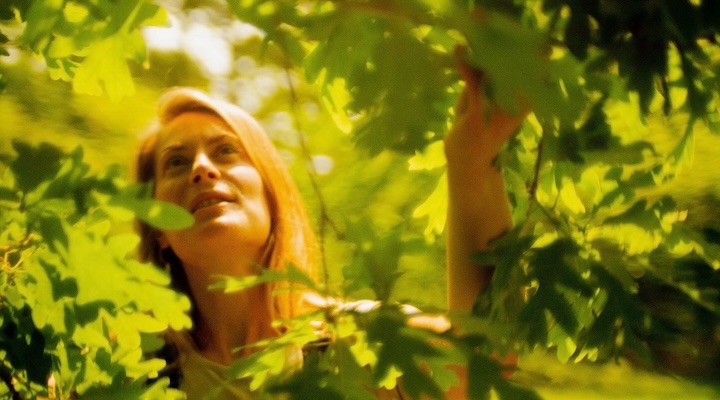
Enter the nut trees. A decade into my reporting, a friend sent me a link to a TEDx Talk by a woman in Greece named Marcie Mayer. Mayer said that acorns are edible. It turns out they’re not just edible but in fact a superfood, and one of our oldest and most abundant human foods. I was intrigued. Still, acorns might have been a passing fancy, except that around the same time, my bird-loving mother became fascinated with an entomologist named Doug Tallamy. Tallamy is from Pennsylvania, and his big message is that oak trees and some other keystone native plants — including other nut trees — have an outsize importance ecologically. A keystone species is one that’s as important to its ecosystem as the keystone in a Roman arch; if you take it out, the whole system falls apart.
My mother couldn’t stop telling me about the benefits of these trees for the birds. Tallamy has studied the relationships between plant species and insects (which form the base of our food chain), and he’s found that 75% of the insect food required by birds and other wild animals is produced by just a few plant families. Maples, for instance, support 297 species of caterpillars, while yellowwoods (which grow in the southeastern United States) support none. Not all plants are created equal when it comes to food production and supporting wildlife and ecosystem health. Some plants do very little, while others are heavy lifters.
Oaks, to borrow Tallamy’s words, are the top “life support” plants in most North American ecosystems. The genus supports more than 557 species of caterpillars — far more than any other group of trees. Many cultures historically have called oaks “the tree of life,” and clearly, this is for good reason. So, while my mom got excited about the bird support side of things, I began thinking about what this meant for humans. I realized that if we grew our food on these keystone trees in the form of nuts — instead of the monocultures of corn and soybeans that make up so much of our food system today — it would have a positive impact on other species, rather than a negative one.
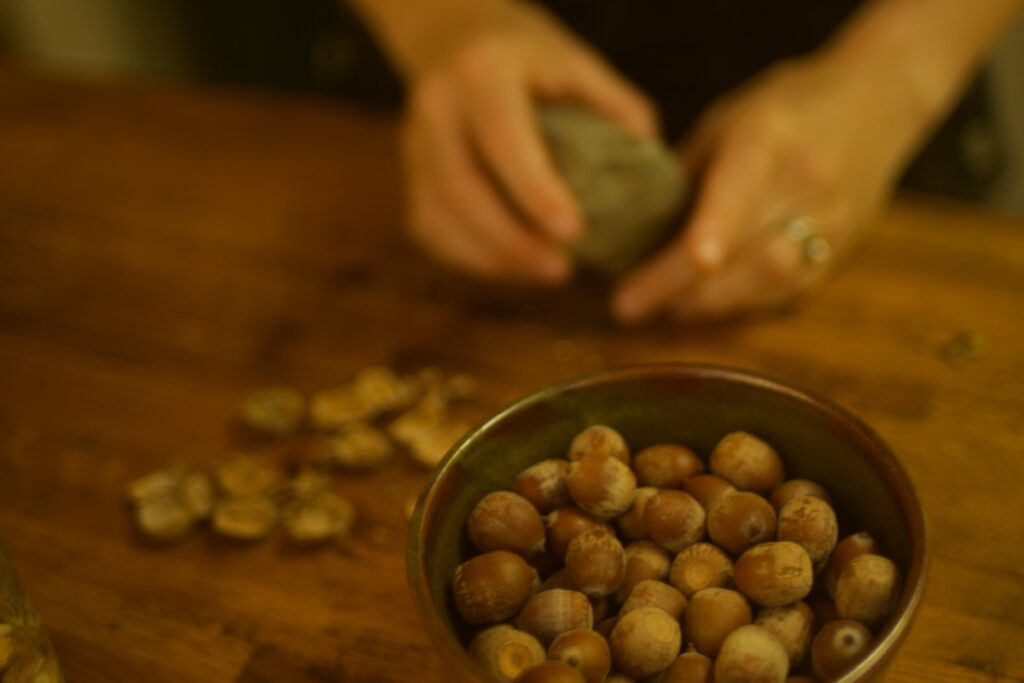
I kept digging and learned that people all over the northern hemisphere have been eating nuts from keystone trees like oaks, chestnuts, and hazelnuts as staple foods for thousands of years — and that it’s only recently that so many of us have forgotten this valuable foodway. I wondered if perhaps we’d stopped because the oaks and other keystone trees didn’t produce enough for our current populations, but I was quickly disabused of that notion. That same fall, I learned that a growing number of farmers are trying to bring keystone nut tree species back by establishing farms centered on them and a long list of other species native, or naturalized, to the oak ecosystems of North America: not just nuts but also apples, plums, cherries, peaches, grapes, asparagus, mushrooms, venison, quail, turkey, rabbits and more. One farmer called it “restoration agriculture”: a way of bringing the land back to health with food production, instead of by removing human touch. Oak ecosystems, I began to realize, are prime human habitat. Perhaps we were more like the birds than I’d imagined.
The more I got to know the oak trees around my house on Cape Cod, though, the more I wondered about how I might help them. A year into my fascination with acorns a fellow author introduced me to Ron Reed — an Indigenous medicine man, biologist, father and member of the Karuk Tribe in present-day California. Reed’s people have eaten acorns and tended oaks as a staple food crop since time immemorial, and as we got to know each other, I told him that I’d noticed, as I began collecting and processing acorns, that some oaks were healthier and more productive than others. “Why?” I asked, and Reed answered with a story.
In Karuk culture, he said, every year his people perform what are called Pikyávish or World Renewal Ceremonies. The point is to create habitat for other species through ceremony. I wondered aloud: “How do you create habitat for an oak tree through ceremony?” I’d always seen oaks as natural and wild, two words that pretty much by definition exclude human care. “Fire,” Reed answered. Every year during the World Renewal Ceremonies, Karuk people light prescribed or cultural fires to keep the land healthy.
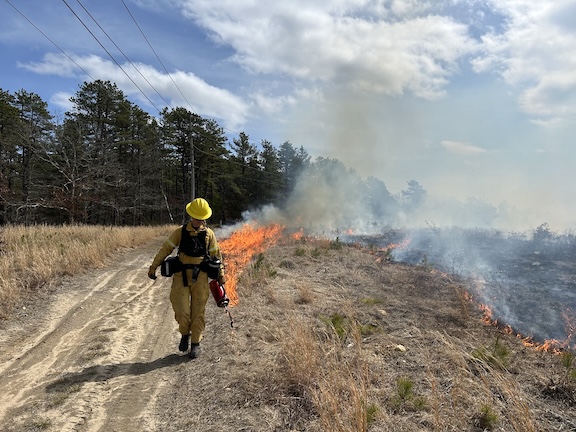
It turns out many oak ecosystems need fire to stay healthy, not just in California but also in many other places across North America. Because of fire suppression, oaks and other fire-loving nut trees are actually having trouble regenerating in various places. To understand more, I got trained in prescribed fire and started going on burns in oak lands near my home.
As I did, Reed reminded me that this is our job as humans: to burn our woodlands to keep them healthy. Even as I absorbed this it kept surprising me, because I’d always seen humans as a threat to the natural world — and here Reed was telling me that we are vital to these keystone trees that in turn are vital to so many other species.
Slowly what I came to understand, as I filtered what Reed was teaching me through my own background of Western science speak, is that not only are oaks a keystone species — a species so important that without them, whole ecosystems fall apart — but also, so are we. The idea of humans as a keystone species was mind-bending.
There are different kinds of keystone species — mutualists like bees, keystone plants like oaks, predators like sharks — and there’s also a category called ecosystem engineers. These are animals like beavers and elephants that uproot and trample and, in doing so, create habitat. This is the category humans fit into. Today we modify ecosystems mostly in negative ways: through greenhouse gas emissions, habitat destruction, fertilizer runoff, and so on. But historically, our largest role in most places around the world has been to manage and create ecosystems with fire. As fire historian Stephen Pyne has put it, we are “the fire animal.” In North America, this means that humans and our fire and these keystone nut trees have been in relationship for thousands of years.
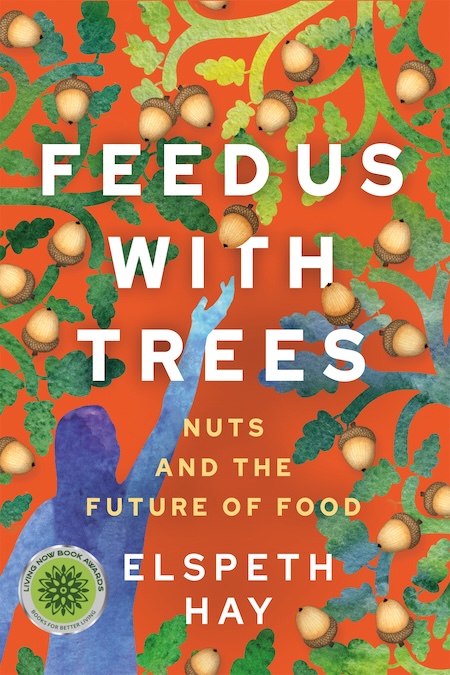
The exciting news is we can do this again. We can be part of the living fabric of our places instead of trying to remove ourselves from them. We can tend these trees of life — and in doing so, create more life. We can increase biodiversity. We can put carbon back in the ground; we can reverse dead zones. We can produce an abundance of nutritious, delicious food while generally acting as an ecological force for good. This is why I wrote my book, “Feed Us with Trees,” and this is why I believe that the future is nuts. There are all kinds of ways to get started, and many don’t require owning a big swath of land. If you have an oak in your yard, you could start by leaving it there instead of cutting it down. Next you might make sure it has some space around it and that it is getting plenty of light, and then move on to learning what kinds of acorns it produces and how to process them into food. If fire calls, find out what’s happening locally with prescribed burns. Sometimes groups need help with public advocacy; other times they’re looking for more certified practitioners to help burn. Maybe you have a plot of open space or woodland you could diversify: think not just oaks but also chestnuts, hazelnuts, hickories, and black walnuts.
And perhaps most importantly, see what happens when you begin thinking of yourself as an ecological force for good. It’s amazing how much can shift when instead of asking how am I hurting this place, we instead start wondering why does it need me?
Elspeth Hay is a public radio host and the author of the award-winning book “Feed Us with Trees: Nuts and the Future of Food.” Deeply immersed in her own local food system, Hay’s work focuses on the people, places, and ideas that feed us. Find her online at elspethhay.com.
This article was originally published in the spring 2026 issue of The Maine Organic Farmer & Gardener.